
By Uche Kalu
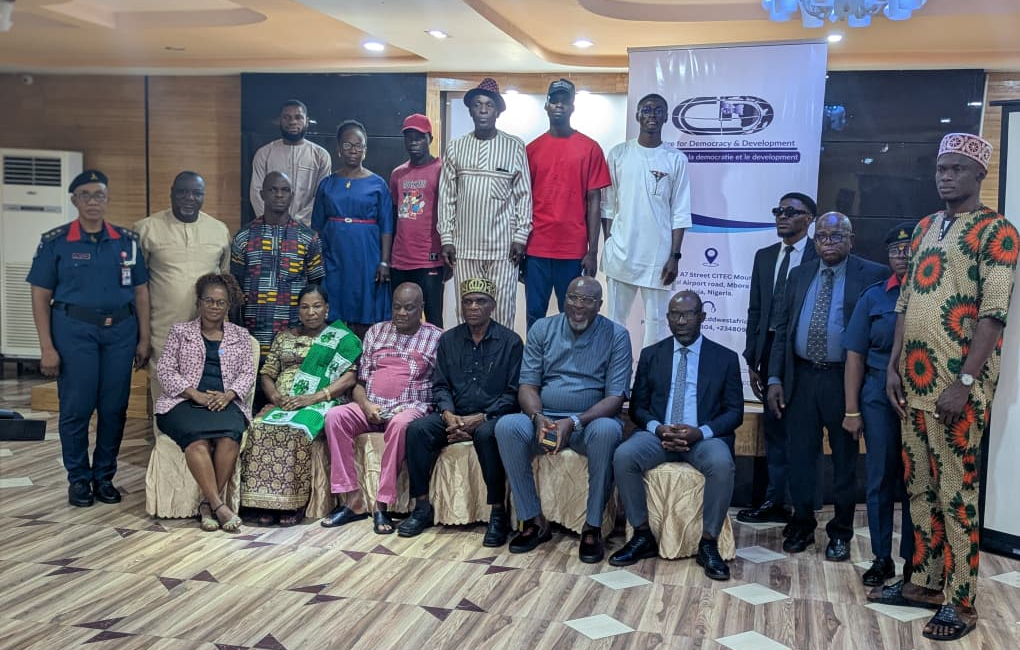
As Anambra State prepares for the November 8th 2025 governorship elections, the Centre for Democracy and Development (CDD-West Africa) has taken a proactive step by organizing a one-day stakeholders’ training and roundtable discussion focused on tackling misinformation, disinformation, and hate speech. This initiative aims to equip stakeholders with the necessary skills and knowledge to identify and combat these issues, promoting a more informed and peaceful electoral process
The event, which was held simultaneously in the three senatorial zones of Anambra State – Onitsha (Anambra North), Nnewi (Anambra South), and Awka (Anambra Central) – featured stakeholders from diverse groups, coming together to address key issues related to the upcoming governorship election.
The Director of CDD West Africa, Dr. Dauda Garuba in an opening remarks emphasized that the organization’s training aims to equip stakeholders with the necessary skills and knowledge to identify and combat misinformation, disinformation, and hate speech. Through stakeholder engagement and the dissemination of fact-based information, CDD West Africa aims to cultivate a more informed and peaceful electoral process, ultimately promoting democratic values and integrity in the 2025 Anambra gubernatorial election.
In his presentation, “Introduction to Information Manipulation,” facilitator Mr. Raji Olatunji defined information manipulation as the deliberate distortion, alteration, or selective presentation of information to influence people’s perceptions, beliefs, or actions. He emphasized the critical importance of fact-checking in verifying information accuracy, debunking false claims, and preventing the spread of misinformation.
He underscored the far-reaching consequences of information manipulation, noting its potential to sway public opinion, inform political decisions, tarnish reputations, and undermine trust in institutions. He stressed the crucial need for awareness and critical evaluation of consumed information to mitigate these risks.
Mr. Olatunji defined fact-checking as the systematic process of verifying the accuracy of information, claims, or statements to determine their truthfulness and validity. He explained that this involves rigorous research, analysis, and evaluation of evidence to confirm or debunk claims, with the primary objective of preventing the dissemination of misinformation and disinformation. “Fact-checking is an essential practice in journalism, academia, and other fields where accuracy and truth are paramount,” he emphasized.
Stakeholders voiced concerns about current political trends, citing issues such as misinformation, disinformation, partisan divisions, inflammatory rhetoric, electoral manipulation, social justice and human rights violations. These concerns mirror a global phenomenon of political upheaval, where voters are increasingly disillusioned with traditional parties.
They recommended several key steps to move forward, including making the Independent National Electoral Commission (INEC) fully independent to ensure credible elections, implementing a transparent system for collating and announcing results at the polling unit level, and encouraging youth participation in politics to harness their potential as future leaders.
- Kalu is of the Ministry of Information, Anambra State *

Good one